
The Day I Earned My Career
For the first four years of my career, I worked as a software engineer at Microsoft, building one of the safest browsers on the web. I was good at it. I earned promotions, delivered consistently, and met expectations. Despite the early success, there was always an ounce of doubt in the back of my mind. Whenever I dared to think bigger and bolder, I felt dread about the possibility that maybe I did not belong there. Even worse, I feared not that others would find out about my incompetence, but rather that I would be the one to find out about it. The evidence would mean I was not worthy of following my future dreams and aspirations.
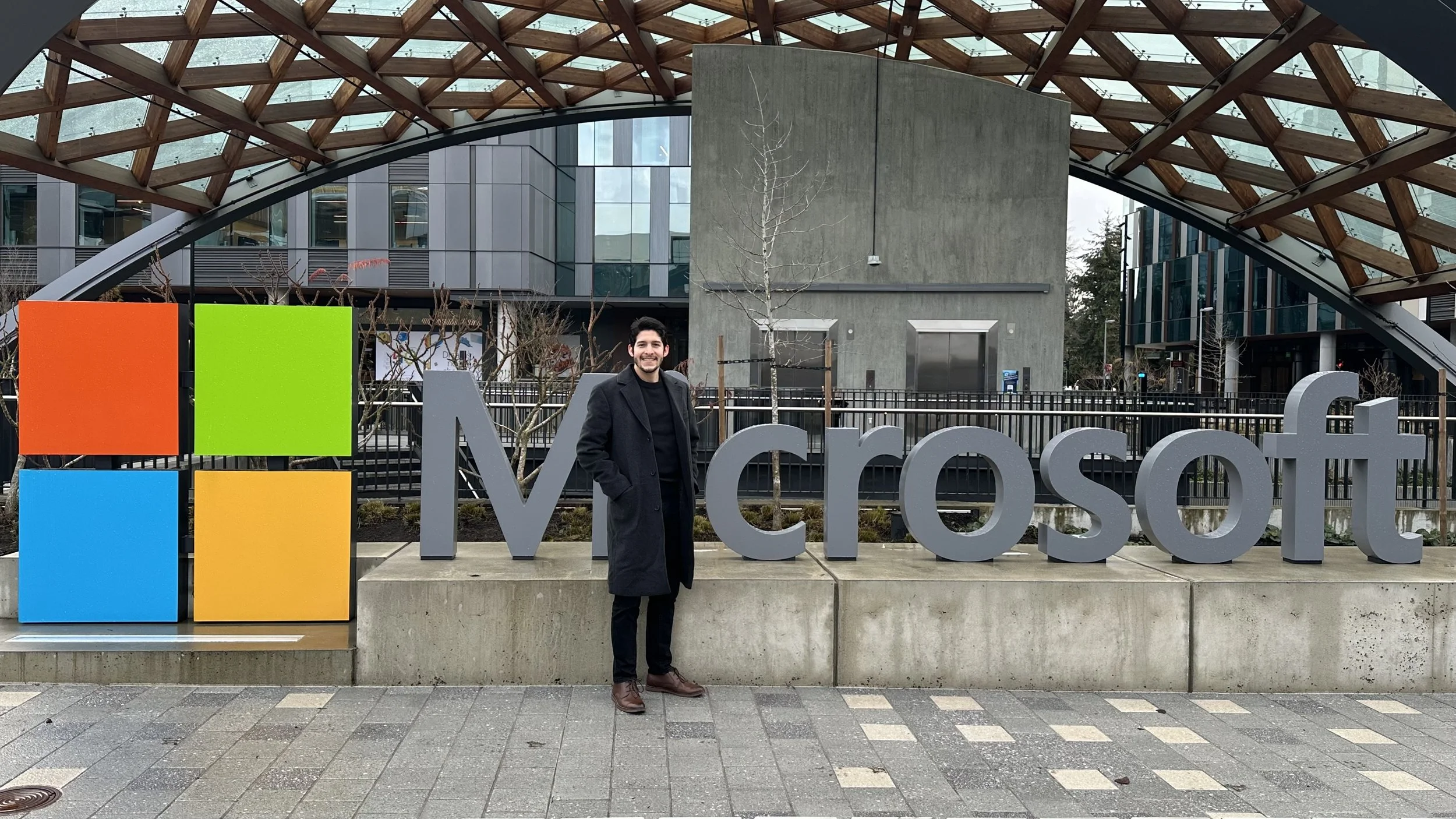
Exploring the new Microsoft campus in February of 2025
That doubt was amplified by the fact that my approach to software engineering sometimes felt at odds with the way many old-school Microsoft engineers practiced the craft. They had built entire careers designing operating systems with unbounded lifetimes and strict backward compatibility. In other words, they were trained to build software meant to last an eternity. That is a hard problem to solve, and for Microsoft, it makes complete sense. On the other hand, my instincts were different. I preferred a faster, more iterative approach, where ideas could be built, tested, and refined before committing fully. I now understand that neither approach is wrong; they simply serve different problem spaces. At the time, however, the mismatch made me question whether my style truly belonged.
My style of engineering was not limited to software; it was how I had lived my entire life. Iterating quickly, making decisions with incomplete information, taking risks, pivoting, and conquering with full commitment. These skills had helped me earn scholarships, study abroad, buy my first home, navigate higher education, and survive immigration systems. It was one of my strengths, and one of my differentiators.
It’s not that I was inflexible or had a fixed mindset. I adapted to my mentors and absorbed their lessons, many of which I still carry forward. My discomfort came from a persistent urge to shape the craft in my own way. Over time, I learned to see that discomfort as a sign that software engineering itself might not be the right career for me.
In an effort to expand my skillset and better understand how to build products people loved, I transitioned into product management. As a product manager on the Microsoft Edge team, I partnered closely with engineering, legal, marketing, and public relations to shape a security product that protected users on the web and aligned with the Microsoft brand. We launched successfully, and the work was highlighted by Microsoft’s CEO, Satya Nadella, at the Ignite conference. Things were going quite well. Still, I missed the craftsmanship of building, and I found myself unsure of where my career was actually headed.
Then, Microsoft announced its partnership with OpenAI and began a large-scale realignment of company investments. As part of the strategy, over ten thousand roles were eliminated, including mine. This triggered a new stage of identity discovery and career exploration, where I examined the full landscape of technology roles; including engineering, architecture, product management, and people management.
I joined the Starbucks engineering team and committed myself fully. In the months that followed, I took on an aggressive range of projects at work and in my personal life. I spent nearly all my available time learning system design, cloud services, design patterns, algorithms, data structures, and product management techniques. Without realizing it, I fell in love with software engineering once again, not as a role, but as a craft. I was fortunate to join a mighty engineering team tasked with rejuvenating product and menu services at Starbucks. This team believed in my capabilities and allowed me to build software with real agency. This experience increased my confidence and helped me understand that my methodology for building software works.
Starbucks appointed Brian Niccol as CEO, who announced an upcoming company-wide restructure of resources in the months to come. Brian was transparent and shared that difficult decisions would be made, and encouraged all Starbucks partners to prepare. This time, I did not panic. I knew it was time to go back into the job market, now finding myself sharper, competent, confident, and authentic. I was ready to keep pushing myself and explore new opportunities deliberately.
With the skills and experience I had earned, I landed multiple offers and chose to return to Microsoft, joining the Defender Endpoint team. I had previously worked on making the web a safer place on the Microsoft Edge team, and this felt like a natural progression into meaningful work with great people. I was glad to contribute again, yet something did not feel right. Microsoft was still a great company, but I was no longer the same person. I realized these clothes were no longer mine to wear, at least not at this time.
I accepted an offer to join the Meta Infrastructure team, where I would build platforms that support the future of human connection. I knew leaving Microsoft so quickly could raise eyebrows, and while staying would have been safe, it would not have been honest. The opportunity to join Meta excited me, and I was ready for the growth and the evolution it demanded.
Before submitting my resignation, I visited my old team at Microsoft Edge. I had a calling to go back there. On my way in, I ran into a sip-and-paint mural on the wall that read, “We only regret the chances we didn’t take”. I thought about any regrets I had from back then, and I wished I had believed more in myself, that I made more jokes at work, that I took more risks, and that I failed faster. The mural was not a lesson, but rather a confirmation of what I already knew and a reinforcement that I was on the right path.
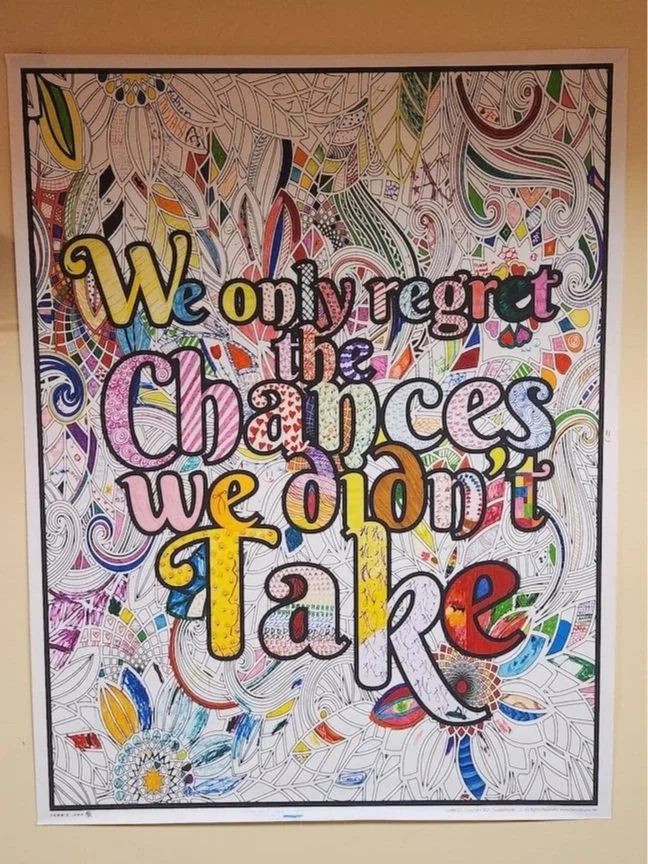
Paint & Sip Mural inside Microsoft building 35
On my way out, there was a small table with a chessboard outside the elevator. I walked up to it and knocked the king over before walking off into the elevator. That was my victory. I chose myself, and I moved forward.
That was the last day I returned to Microsoft Edge. From that day on, I committed to trusting my judgement and doing the right thing for myself, authentically.
That was my move.